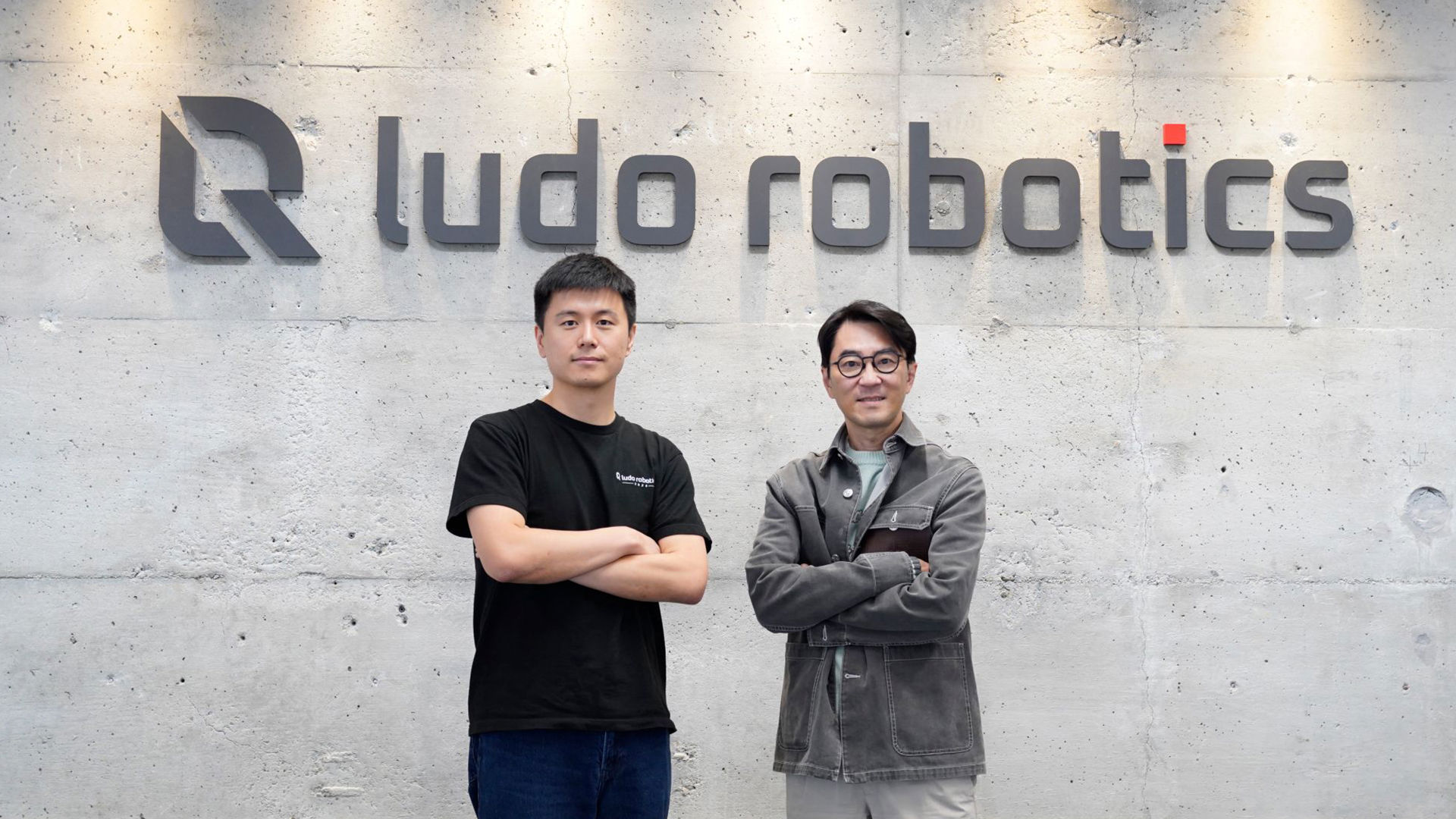

PUBG: Battlegrounds developer Krafton is bringing nearly 20 years of experience in building games and virtual worlds into robotics. Its subsidiary Ludo Robotics is developing an AI for socially intelligent robots that can better understand, communicate and collaborate with people.
According to information relayed to Oyun Günlüğü by Krafton, Ludo Robotics introduced Ludi 0.2, the latest version of its robotic intelligence system, at the 2026 Bay Area Robotics Symposium (BARS) held at UC Berkeley.
While building intelligent systems for virtual worlds populated by millions of unpredictable, social and constantly changing players, Krafton invested heavily in machine learning, reinforcement learning, large language models and multimodal AI. This work includes co-playable characters (CPCs), AI teammates developed in collaboration with NVIDIA to understand players and respond to them in real time. Ludo Robotics is now taking a similar kind of AI into the physical world.
“For nearly two decades, Krafton has been building games and virtual worlds where people and intelligent systems interact in real time,” said CH Kim, CEO of Krafton and Ludo Robotics. “Through Ludo Robotics, we are drawing on that experience to explore how AI can better understand people and interact with them naturally in the physical world.”
What’s new in Ludi 0.2
Ludi 0.1, introduced in August 2026, combined a vision-language model for reasoning and dialogue with navigation and manipulation capabilities. It was designed to interpret verbal instructions, maintain conversational context, ask clarifying questions and adapt to changing tasks.
Building on that foundation, Ludi 0.2 improves social intelligence, including interpreting human intent, responding to feedback and taking social cues into account. The new version also advances memory and reasoning across changing tasks, more coordinated use of navigation and manipulation, recognition of human gestures and more fluid physical movement in supported environments.
“Robots are becoming increasingly capable of performing physical tasks, but understanding and responding to people remains a major challenge,” said Kangwook Lee, Chief AI Officer at Krafton and CTO of Ludo Robotics. “Ludi 0.2 is another step toward our goal of bringing together conversation, reasoning and physical action.”
Next up: Ludi 1.0
The company’s long-term roadmap includes Ludi 1.0, a next-generation foundation model that aims to unify perception, dialogue and physical action in a single system. The goal is for robots to communicate and act with people in real time while maintaining a shared understanding of tasks.
Because real-world human interactions involve uncertainty, shifting preferences, nonverbal communication and unpredictable behavior, training robots for them is difficult. To address this, Ludo Robotics combines simulated environments, AI-generated social interactions and real-world human behavior data. The company is also developing benchmarks that evaluate how robots handle complex social situations involving different personalities, preferences and relationships.
Two hubs in Palo Alto and Seoul
Headquartered in Palo Alto, Ludo Robotics also operates an R&D lab in Seoul, South Korea. Alongside Kangwook Lee, a former associate professor at the University of Wisconsin-Madison, the team includes Chief Scientist Rob Nowak, an IEEE Fellow and UW–Madison professor, and Human-Robot Interaction Lead Yea-Seul Kim, previously an assistant professor in UW–Madison’s Computer Sciences department. The startup’s long-term goal is to build robotic systems that can collaborate naturally with people in homes, workplaces and other physical environments.