
Isometric games
A camera approach that shows the world from above at a diagonal angle, giving depth and an overview at the same time.
What is the isometric genre?
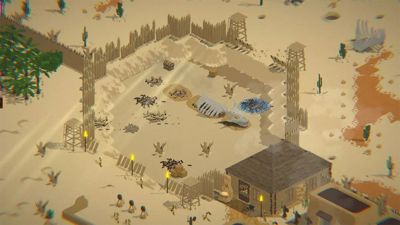
Isometric is not a genre but a choice of viewpoint. The camera looks at the scene not straight from above but from a fixed diagonal angle. This keeps a sense of depth while letting you see the whole play area at once. That is why strategy, tactical role-playing and dungeon crawling games prefer this angle: You do not miss what is going on.
The angle has another practical benefit: Because you can see your party and the enemy formation at the same time, tactical decisions become clearer. That is why the isometric label usually shows up on games where combat depends on positioning.
What defines it?
The scene is shown from above at an angle, and the camera usually does not rotate or rotates only a little.
The whole battlefield can be read at a glance.
Where units stand becomes as important as what they do.
The fixed angle makes it easier to tell locations and characters apart clearly.
Landmark games
Well-known examples often used to explain the genre. For the list on our site, see the games section below.
At a glance
Isometric games (7)


Frequently asked questions
Is isometric a genre or a viewpoint?
Technically it is a viewpoint. It is used as a tag because games that choose this angle share a similar gameplay language: Party management, positioning and tactical combat.
Is top-down the same as isometric?
No. In a true top-down view the camera looks straight down and the sense of depth weakens. In isometric the camera is diagonal, so both height and depth come across.